80/20 Wool Polyamide Floor Coverings: Performance, Design and Durability Explored
In high-end commercial and hospitality architecture, specifying carpet involves balancing sensory elegance with long-term structural performance. Among fiber compositions, the 80/20 wool nylon carpet formulation has served as a global benchmark for heavy-contract environments for decades.
Often referred to in technical documentation as an 80/20 wool-polyamide blend, this specific composite marries the organic attributes of natural fiber with the mechanical strength of synthetic polymers. (Note: Polyamide is the chemical family name for synthetic polymers commonly marketed as nylon in textile engineering.)
For architects, interior designers, FF&E procurement managers, and carpet specifiers, understanding how this 80/20 ratio functions at a molecular and mechanical level is key to specifying floor coverings that maintain visual identity, footfall comfort, and structural integrity across demanding commercial lifecycles.
Deconstructing the 80/20 Ratio: Fiber Mechanics
An 80/20 wool-polyamide specification is not an arbitrary mix; it represents an engineered balance designed to maximize the complementary strengths of two distinct fiber types.
The Natural Attributes of Wool (80%)
Wool accounts for the vast majority of the fiber mass, contributing characteristics that synthetic fibers alone cannot replicate:
-
Spiral Crimp and Structural Resilience: Wool fibers possess a natural three-dimensional crimp that acts like a microscopic spring. When compressed under heavy footfall or furniture point-loads, the fiber flexes and rebounds, resisting pile crushing.
-
Complex Surface Hydrophobicity: Wool features an outer epicuticle membrane coated in natural lanolin lipids. This micro-layer renders the surface naturally water- and soil-repellent, preventing liquid spills from immediately penetrating the core.
-
Inherent Flame Retardancy: With a high Limiting Oxygen Index (LOI) and high ignition temperature, wool naturally self-extinguishes upon exposure to open flame, generating lower smoke emissions compared to pure synthetic alternatives.
-
Aesthetic and Tactile Depth: Wool absorbs dyes deeply into its core cortex rather than just surface-coating the exterior. This creates rich, matte color depth that diffuses light naturally across expansive floor spaces.
The Engineered Role of Polyamide / Nylon (20%)
While wool provides texture, natural stain resistance, and bulk, synthetic polyamide reinforces the structural integrity of the yarn bundle:
-
Tensile and Abrasion Strength: Polyamide possesses exceptionally high tensile strength and resistance to mechanical friction. Integrating 20% polyamide into the spin cycle binds the wool fibers together, drastically reducing fiber shedding and surface abrasion under continuous multidirectional traffic.
-
Tuft Anchorage: In both woven (Axminster) and dense tufted constructions, the inclusion of polyamide improves yarn tenacity, preventing individual tufts from fraying or unraveling at high-stress pivot points and seam junctions.
Performance Considerations in High-Traffic Hospitality Environments
When evaluating an 80/20 wool nylon flooring system against alternative fiber specifications—such as 100% wool, 100% solution-dyed synthetic, or alternative fiber ratios—specifiers must weigh environmental factors against long-term performance objectives.
Mechanical Wear and Appearance Retention
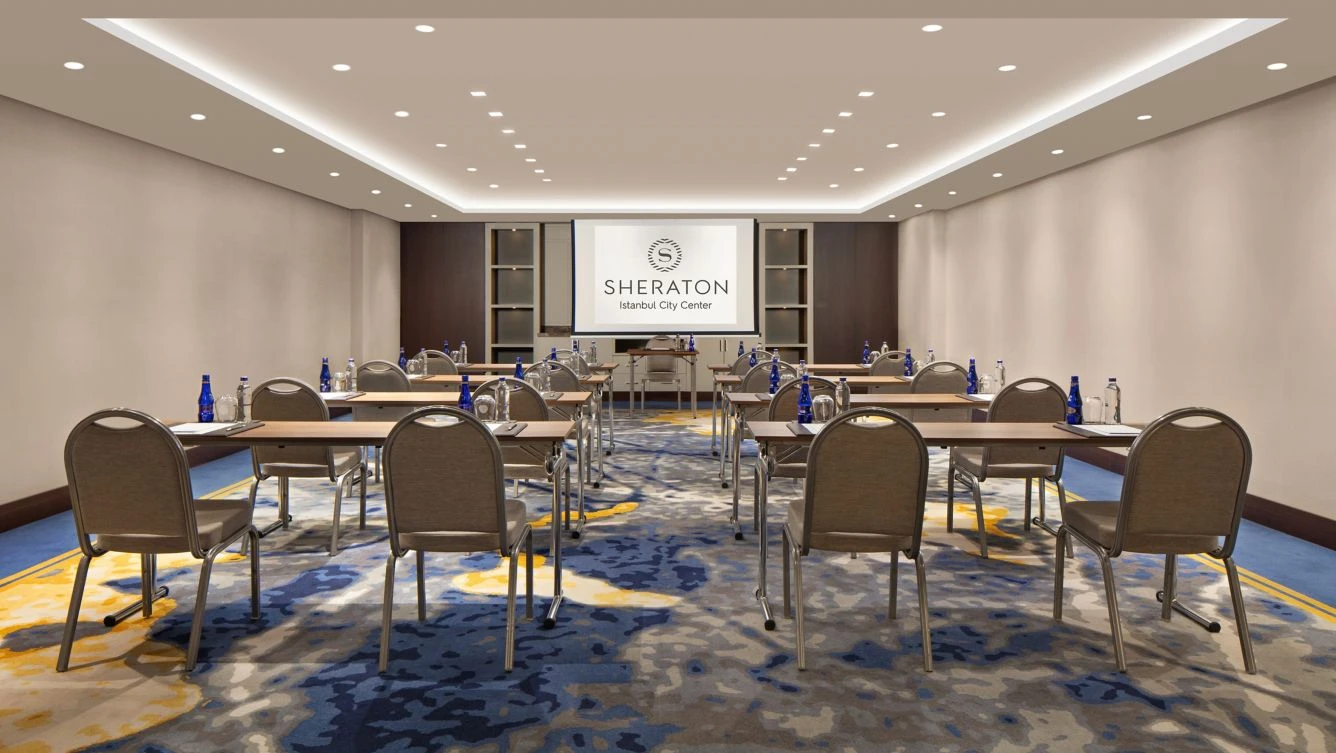
In busy hotel corridors, grand lobbies, and pre-function convention spaces, floor coverings face severe multidirectional traffic, luggage cart wheels, and heavy footfall. A pure wool carpet, while luxurious, may experience accelerated fiber loss and surface fuzzing under continuous commercial abuse. Conversely, a 100% synthetic carpet may resist abrasion but often suffers from static glossiness, rapid flattening in high-traffic lanes, and permanent synthetic melting under friction.
The 80/20 blend mitigates these trade-offs. The 20% polyamide content acts as an internal framework that supports the wool fibers, maintaining pile height and tuft definition under heavy traffic. Meanwhile, the 80% wool matrix conceals minor abrasive wear and prevents the mechanical sheen typical of worn synthetic installations.
Thermal and Acoustic Management
Noise mitigation is a primary acoustic objective in multi-story hospitality projects. The dense, irregular surface structure of an 80/20 wool commercial floor covering absorbs ambient sound waves, reducing impact noise transmission between guest floors and damping reverberation in large public assembly rooms. Additionally, wool’s cellular structure provides high thermal insulation, stabilizing room temperatures and contributing to building energy efficiency.
Design and Color Flexibility
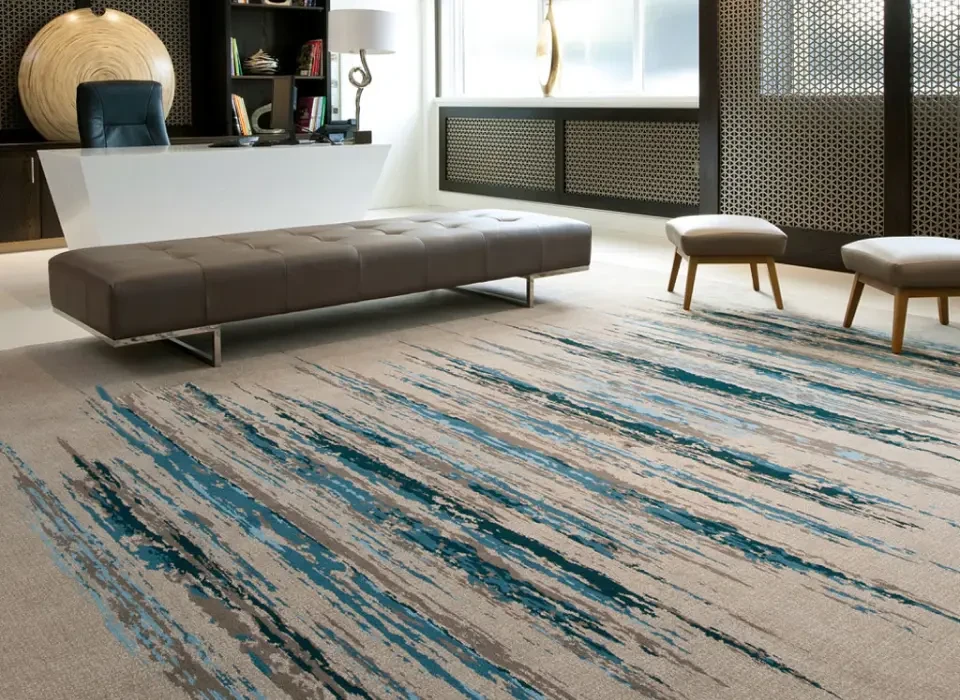
From a creative standpoint, 80/20 wool-polyamide yarns offer interior architects extensive freedom when customizing complex architectural patterns:
-
Color Saturation and Clarity: Wool’s protein structure accepts dye molecules into its core, yielding saturated hues across dark tones and delicate neutrals alike.
-
Pattern Precision: When processed on electronic Jacquard looms (such as Axminster weaving equipment), 80/20 yarn bundles deliver crisp line definition without blurring along pattern boundaries.
-
Matte Texture: Unlike full synthetic carpets, which often exhibit a shiny reflection under bright artificial lighting, 80/20 carpets feature a natural matte finish that preserves spatial atmosphere and architectural lighting concepts.
Maintenance and Operational Guidelines
For property managers and housekeeping directors, routine maintenance directly dictates carpet lifecycle return on investment.
Daily Maintenance and Soil Release
Wool’s outer scales hold dry soil particles near the top of the pile rather than allowing them to migrate deep into the backing structure. Regular vacuuming with a commercial-grade suction cleaner equipped with a brush bar easily removes dry particulate matter before it can cause mechanical fiber wear.
Spot Cleaning and Chemical Sensitivity
Because wool is a protein fiber, it requires specialized care during deep extraction cleaning. Property management teams must use cleaning agents with a neutral pH (between 5.5 and 8.0). High-alkaline chemicals standard in synthetic carpet cleaning can damage wool's outer epicuticle, causing color fading and fiber breakdown.
Key Specification Parameters for Procurement Teams
When drafting project tenders or FF&E schedules, procurement teams should define the complete structural assembly alongside the 80/20 fiber ratio:
-
Yarn Count and Twist Level: Ensure the yarn twist is heat-set correctly to prevent fiber unraveling in high-traffic corridors.
-
Construction Method: Determine whether the project calls for woven Axminster (for high-traffic continuity and zero delamination risk) or heavy-contract tufted construction.
-
Underlayment Integration: Pair 80/20 broadloom with a high-density rubber cushion underlay to absorb point-load impact and extend carpet life.
-
Fire and Building Code Approvals: Confirm compliance with regional fire safety standards, such as EN 13501-1 Class Cfl-s1 or ASTM E648 Class I.
Project-Specific Fiber Selection
While 80/20 wool-polyamide carpet represents a versatile, high-performance specification, it is not a universal solution for every commercial space:
-
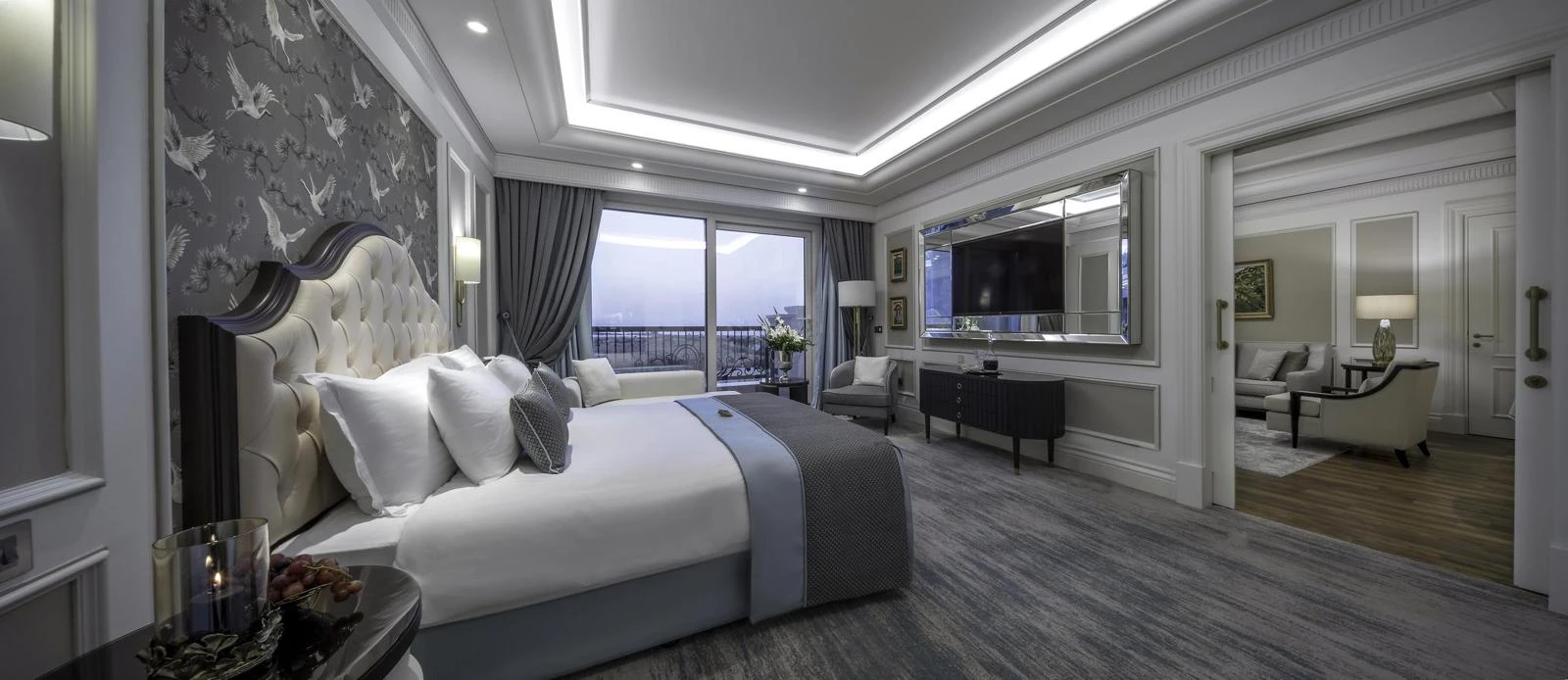
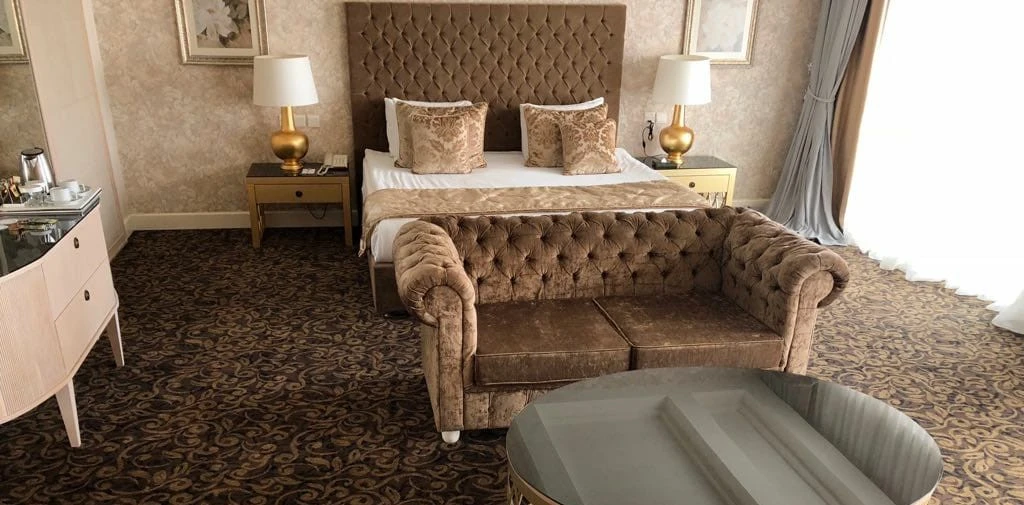
Ideal Applications: Executive guestrooms, presidential suites, public corridors, ballrooms, pre-function spaces, luxury boutique lounges, and corporate boardrooms where tactile comfort and visual elegance must pair with commercial durability.
-
Alternative Options: For areas exposed to heavy chemical spills, direct outdoor dirt tracking, or aggressive bleach cleaning regimes (such as poolside lounges or fast-casual dining venues), a 100% solution-dyed synthetic specification may be more practical.
To explore executed custom installations and review detailed technical portfolios across luxury properties, visit our dedicated Projects showcase.
Collaborating with a Commercial Carpet Specialist
Selecting the right yarn blend, pile weight, and construction method requires aligning design goals with real-world operating conditions. Working closely with an experienced carpet manufacturer during the early design phases ensures technical viability, accurate strike-off sampling, and smooth procurement.
To learn more about custom yarn spinning, technical performance testing, and bespoke manufacturing capabilities for your next commercial project, visit our About Us section at Contempo Carpets.