Casino Floor Coverings: Combining High Impact, Durability and Tailored Design
Designing interior environments for large-scale gaming venues presents a distinct technical and creative challenge. In properties operating continuously, floor coverings must endure severe mechanical stress while delivering a memorable architectural statement. For casino developers, interior architects, and procurement managers, selecting a casino carpet involves balancing high-impact pattern concepts with the physical realities of high-footfall commercial environments.
Floor coverings serve as the foundational plane of a gaming floor, establishing spatial hierarchy, guiding circulation, and dampening ambient acoustic reverberation. Achieving long-term appearance retention requires evaluating fiber composition, pile density, structural backing, and custom pattern development together.
Why Casino Flooring Requires a Specialized Approach
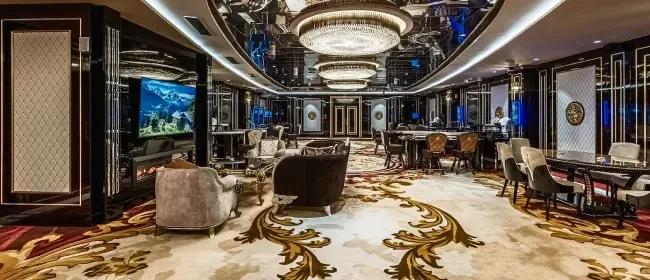
Casino and gaming venues feature an intense combination of operational factors rarely found in standard hospitality or commercial spaces. A single floor layout may encompass multiple distinct zones, including active gaming floors, high-limit suites, sportsbooks, expansive circulation corridors, bars, and back-of-house connections.
These interiors demand specialized casino coverings due to several key factors:
-
Continuous Foot Traffic: Gaming floors endure non-stop, multi-directional pedestrian traffic along main aisles and gaming tables.
-
Rolling Loads: Service equipment, heavy luggage trolleys, and gaming equipment create localized shear stress across carpet backings.
-
Extended Operational Hours: Venues frequently operate around the clock, limiting opportunities for intrusive maintenance or spot repairs.
-
Complex Spatial Scale: Expansive open layouts require large-scale visual continuity without creating visual fatigue over long distances.
A generic commercial carpet cannot withstand these combined forces without suffering rapid pile crush, tracking lines, or edge fraying. A tailored approach ensures the carpet specification aligns with the exact physical demands of the venue.
Designing Carpet Around the Identity of a Gaming Venue
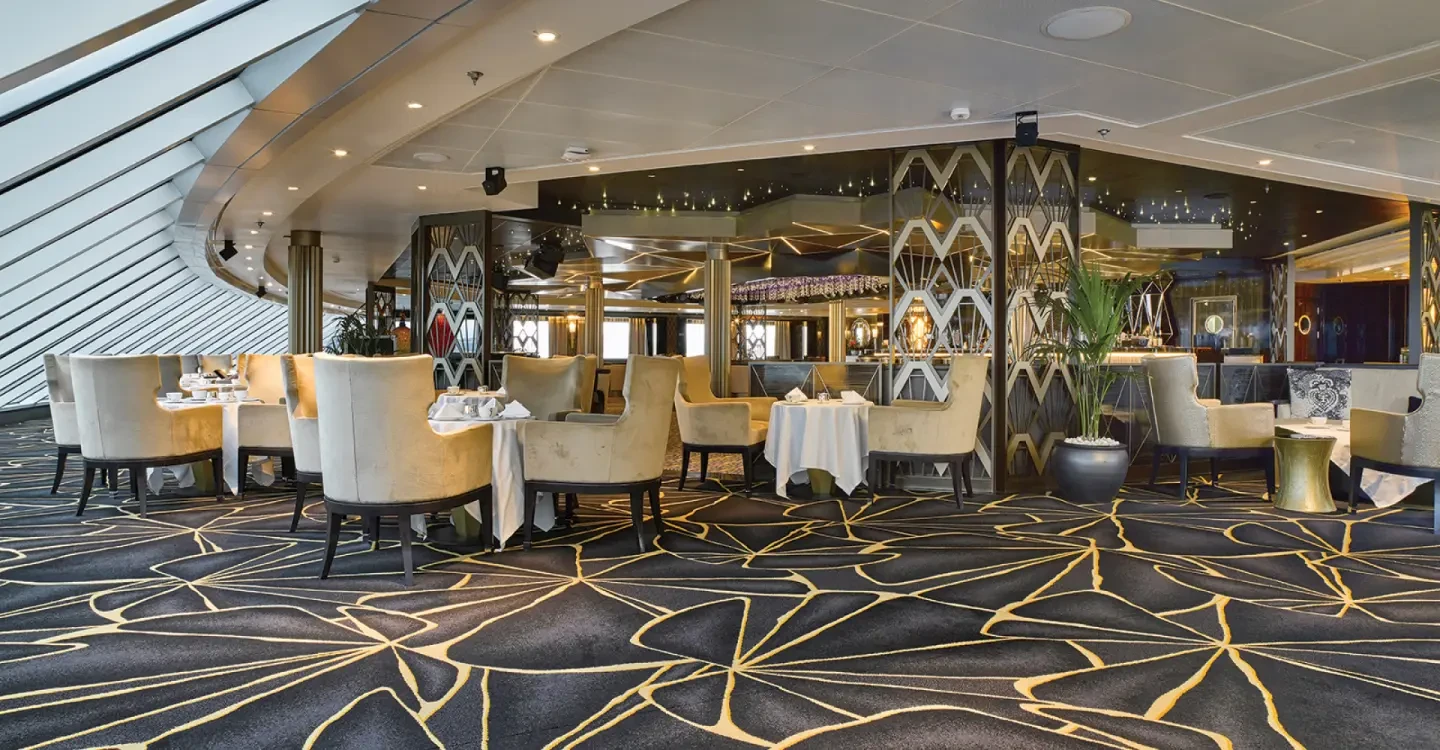
Floor coverings are central to the overall design language of an entertainment property. Rather than functioning as a passive finish, bespoke textiles help establish spatial identity, complement architectural joinery, and respond to dramatic interior lighting schemes.
Design teams can utilize custom colorways, geometric grids, or fluid organic patterns to visually ground a space. For example, scale and directional motifs can delineate open gaming areas from surrounding access routes, anchoring floor layouts without building physical barriers. By aligning carpet design with wall treatments, ceiling soffits, and custom lighting, the floor plane becomes an integral architectural layer rather than an isolated material.
Custom Casino Floor Covering and Pattern Development
Selecting a custom casino floor covering allows interior designers to create original patterns tailored to the specific dimensions of a property instead of relying on standard catalog broadlooms.
Effective pattern development considers the relationship between scale, repetition, and spatial geometry:
-
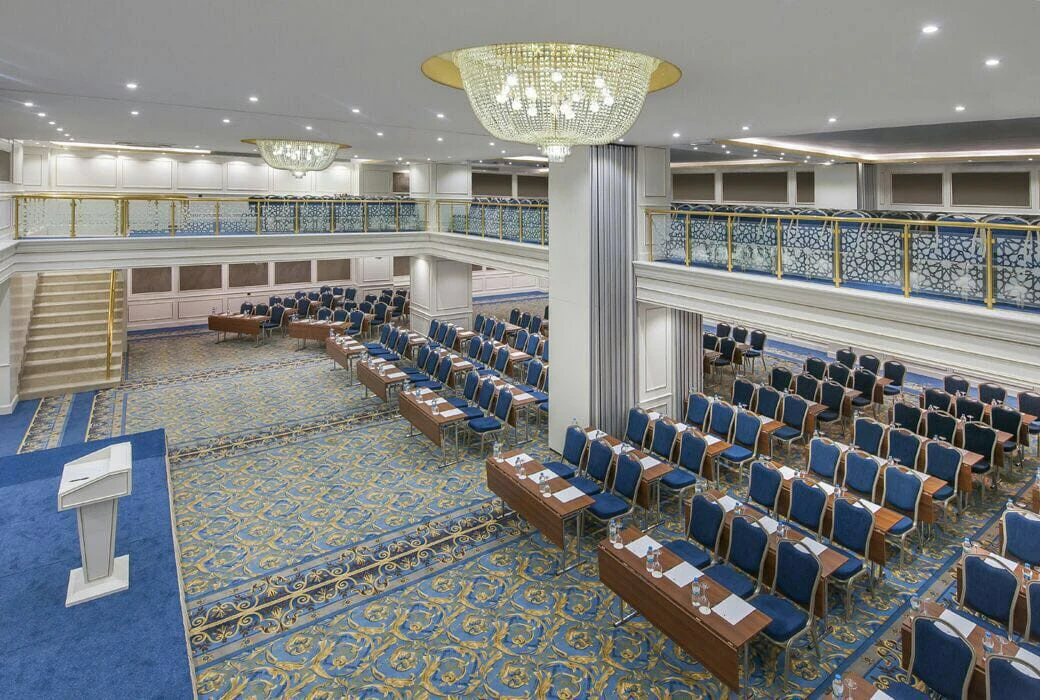
Scale and Proportion: Pattern motifs must be proportionalized to fit both expansive gaming floors and narrow connecting hallways.
-
Color Depth and Saturation: Pre-dyed yarn systems ensure deep color saturation that maintains visual clarity under artificial lighting.
-
Directionality and Flow: Linear elements and repeating motifs guide guest movement intuitively through circulation paths toward primary amenities.
Collaborating early with a specialist manufacturer allows designers to fine-tune pattern drop matches, adjust repeat sizes, and test strike-off samples under property-specific lighting conditions prior to production.
Durability Considerations for High-Traffic Gaming Environments
Durability is not determined by a single material attribute; it is the result of a complete carpet specification working together under physical stress. When evaluating gaming flooring, specifiers must consider how yarn density, fiber mechanics, and structural backings resist long-term mechanical wear.
High tuft density keeps individual yarn bundles upright, distributing point-load impact evenly across the carpet surface. Incorporating high-performance fiber blends—such as wool mixed with high-tenacity polyamide—combines the natural soil release, acoustic dampening, and flame retardancy of wool with the high tensile strength of synthetic polymers. Furthermore, dimensional stability relies on robust backing systems that resist secondary backing delamination under heavy wheel loads.
Why Pattern Can Matter as Much as Performance
A detailed pattern is not merely an aesthetic choice; it is an operational strategy. In high-traffic environments subject to heavy footfall and beverage spills, multi-tonal patterns and complex geometries play a key role in long-term appearance retention.
Combining varied visual scale, contrast, and multi-colored motifs helps mask routine soil tracking between scheduled maintenance cycles. While pattern design cannot replace regular vacuuming and extraction cleaning, thoughtful color distribution ensures the floor plane maintains a clean visual presentation throughout daily operation.
Choosing the Right Construction for Casino Flooring
Selecting the appropriate carpet construction depends on the target zone, project timeline, and traffic volume. Specifiers typically evaluate two primary options:
-
Woven Axminster Construction: Weaves face pile and backing yarns together simultaneously into a single matrix. Woven construction offers high tuft lock, excellent dimensional stability, and zero delamination risk, making it an ideal specification for main corridors and heavy-use gaming floors.
-
High-Density Tufted Solutions: Punches yarn loops into a primary backing cloth secured with synthetic latex. Tufted options offer rapid production turnarounds and design flexibility, providing a practical choice for secondary rooms or lower-traffic lounges.
Evaluating these options allows procurement teams to balance visual goals with operational demands across different project budgets.
Casino Coverings Across Different Interior Zones
Because functional requirements vary across a property, a single carpet specification rarely suits an entire venue:
-
Main Gaming Floors: Require high-density woven broadloom engineered for high-impact foot traffic and rolling cart loads.
-
Circulation Corridors: Benefit from directional patterns and high row counts to manage linear wear lanes and guide guest orientation.
-
VIP Lounges & High-Limit Suites: May feature plush cut-pile textures or hand-tufted accents to prioritize underfoot comfort and tactile luxury.
-
Bars & Dining Spaces: Demand stain-inhibited fiber formulations paired with dense pile constructions that tolerate frequent cleaning regimes.
From Concept to Finished Casino Carpet
Executing a bespoke carpet project requires structured coordination between the design studio, procurement manager, installation contractor, and manufacturing facility:
-
Design Brief & Spatial Audit: Reviewing CAD floor plans, spatial lighting, and traffic profiles.
-
Artwork & Color Development: Translating visual concepts into manufacturable textile repeats and matching dye lots.
-
Physical Sampling: Producing physical strike-offs to evaluate color accuracy, pile texture, and pattern scale on site.
-
Technical Specification: Finalizing yarn weights, pitch, row density, backing systems, and seaming diagrams.
-
Manufacturing & Delivery: Executing loom runs according to project timelines and shipping to site.
Procurement Considerations for Casino Carpet Projects
For procurement managers, sourcing bespoke casino flooring requires managing clear technical data sheets alongside project delivery schedules. Procurement schedules must account for physical sampling approvals, custom loom creeling, freight logistics, and site subfloor preparation.
Working directly with an experienced carpet manufacturer provides project stakeholders with transparent sampling workflows, clear technical documentation, and quality control assurances from raw material sourcing through broadloom production.
Develop a Carpet Around Your Casino Interior
Successfully specifying carpet for gaming and entertainment properties requires aligning creative vision with rigorous performance engineering. By considering traffic density, pattern scale, fiber blends, and structural backing systems early in the design phase, project teams can deliver floor coverings that enhance spatial atmosphere while enduring continuous commercial operation.
Planning a casino or entertainment interior project? Discuss Your Casino Carpet Project with the technical specification team at Contempo Carpets to request custom strike-offs, yarn tuft samples, or a project consultation.