What Makes Heavy-Contract Axminster Suitable for High-Traffic Hospitality Curations?
Specifying flooring for commercial hospitality environments requires navigating a complex intersection of aesthetic vision, structural performance, and operational durability. In properties such as multi-story hotels, convention centers, and casino resorts, floor coverings must endure constant mechanical stress while preserving their visual clarity. For interior architects, FF&E procurement managers, and technical specifiers, selecting heavy contract Axminster carpet offers a proven architectural solution designed to meet these dual demands.
Evaluating heavy-contract woven textiles involves analyzing structural mechanics, fiber composition, spatial traffic dynamics, and long-term maintenance regimes. Understanding how these factors interact enables project teams to make informed specification choices that safeguard both design integrity and capital investment.
Understanding Heavy-Contract Axminster Carpet
To specify carpet effectively for demanding commercial interiors, project teams must understand the technical characteristics that distinguish heavy-contract woven materials from lighter commercial or residential products.
What “Heavy Contract” Means in Commercial Flooring
In commercial flooring terminology, a "heavy contract" classification indicates that a carpet construction has been engineered to withstand severe, continuous foot traffic and heavy rolling loads. However, a product does not earn this designation simply by being an Axminster weave.
Suitability for heavy contract use depends on specific manufacturing parameters such as yarn density, pitch and row count, mass per unit area, and long-staple fiber selection. Higher tuft density prevents pile flattening and structural matting under intense footfall, while calibrated yarn mass balances underfoot cushioning with mechanical resistance to heavy wheel loads. Specifiers must evaluate these individual parameters against the specific traffic projections of the target environment rather than assuming all woven carpets perform identically.
How Woven Axminster Construction Supports Hospitality Applications
Axminster carpet is manufactured on specialized Jacquard looms using a traditional woven process. Unlike tufted methods—where face yarn is punched into a pre-made backing and secured with latex adhesive—woven Axminster weaves the face yarn pile and the structural backing yarns warp and weft together simultaneously into a single, unified textile matrix.
This integrated structural interlock delivers several operational advantages for commercial properties. Because the pile and backing are woven as one unit, the carpet cannot experience secondary backing delamination under heavy wheeled trolleys or luggage carts. Furthermore, individual yarn tufts are anchored by intersecting structural threads, minimizing yarn pull-out in high-use corridors and allowing broadloom layouts to maintain structural stability without stretching or bubbling over time.
Why High-Traffic Hospitality Areas Require Careful Carpet Specification
Public zones in luxury hospitality facilities endure severe environmental and mechanical stresses that demand rigorous specification standards.
Managing Traffic, Appearance, and Operational Demands
In grand lobbies, main corridors, lift lobbies, and pre-function convention spaces, floor coverings face multidirectional foot traffic, localized friction, and direct soil tracking. Poorly specified carpets in these zones can suffer from rapid appearance loss—where fibers crush, colors dull, and traffic lanes become permanently visible long before the physical structure fails.
Specifying a high-density commercial Axminster carpet allows project teams to engineer the pile density and yarn twist to withstand these mechanical forces. Higher tuft density keeps yarn bundles upright, distributing point-load pressure evenly across the backing matrix.
Considering Maintenance and Lifecycle Requirements
A carpet's total cost of ownership is largely determined by its long-term appearance retention and ease of maintenance. High-traffic environments require regular vacuuming, periodic deep extraction cleaning, and immediate spot treatment.
Woven Axminster constructions—particularly those using wool-rich fiber blends—naturally resist dirt penetration due to the microscopic scale structure of natural wool fibers. This soil-hiding capability helps maintain visual cleanliness between scheduled deep-cleaning cycles, supporting efficient housekeeping operations.
The Design Advantages of Woven Hospitality Flooring
Beyond mechanical performance, commercial Axminster weaving technology provides interior design teams with exceptional creative freedom.
Detailed Patterns and Hospitality Design Concepts
Modern electronic Jacquard looms allow designers to execute complex, multi-colored patterns with crisp definition. Unlike printed carpets, where color is applied to the surface after manufacturing, Axminster yarn is pre-dyed and woven straight into the pile structure. This technique ensures deep color saturation through the full depth of the pile.
Design teams can incorporate up to 16 distinct colors within a single pattern, enabling subtle gradients, intricate historic motifs, modern geometric designs, or expansive organic patterns tailored specifically to a property's architectural narrative.
Coordinating Carpet Design with Hotel Interiors
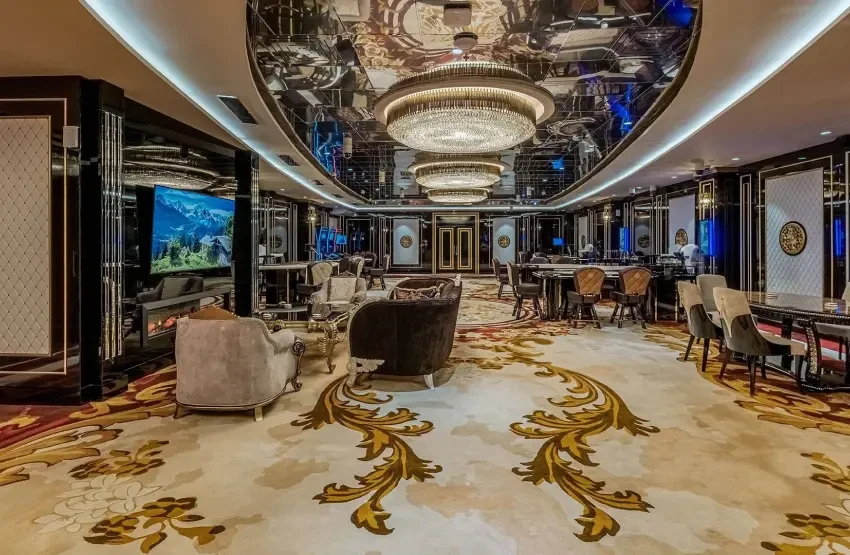
Custom weaving capabilities allow architects to scale patterns precisely to the dimensions of individual spaces. A large-scale floral or geometric motif can be proportionalized to fit a broad ballroom footprint, while a coordinated companion pattern is scaled down for adjoining corridors or pre-function areas.
This flexibility allows design teams to maintain aesthetic continuity across distinct functional zones while varying the technical specification—such as yarn weight or density—to match the specific traffic profile of each area.
Key Specification Factors for High-Traffic Hotel Flooring
When drafting technical specifications for high traffic hotel floor covering projects, procurement teams should focus on fiber composition, acoustic underlayment, and safety compliance.
Fiber, Construction, and Performance Considerations
An 80/20 wool-nylon blend remains the industry benchmark for luxury contract applications, combining wool's natural soil resilience, elasticity, and fire retardancy with synthetic nylon's high tensile strength and abrasion resistance. Additionally, woven wool-rich Axminster carpets naturally meet stringent international building code requirements for flame spread and smoke development, such as EN 13501-1 Class Cfl-s1 or ASTM E648 Class I standards.
Installation, Maintenance, and Project Coordination
Even the highest quality woven carpet will fail prematurely if installed improperly. Heavy-contract Axminster requires skilled commercial installation teams familiar with stretch-in techniques over heavy underlay, or dual-bond installation methods for ultra-high-traffic areas. Accurate seaming plans and pattern-matching diagrams are essential to minimize material waste and maintain visual continuity across complex room boundaries.
Where Heavy-Contract Axminster Can Be Considered in Hospitality Projects
While heavy-contract Axminster is a highly versatile flooring material, its application should be targeted to zones where its specific structural and aesthetic qualities deliver maximum value:
-
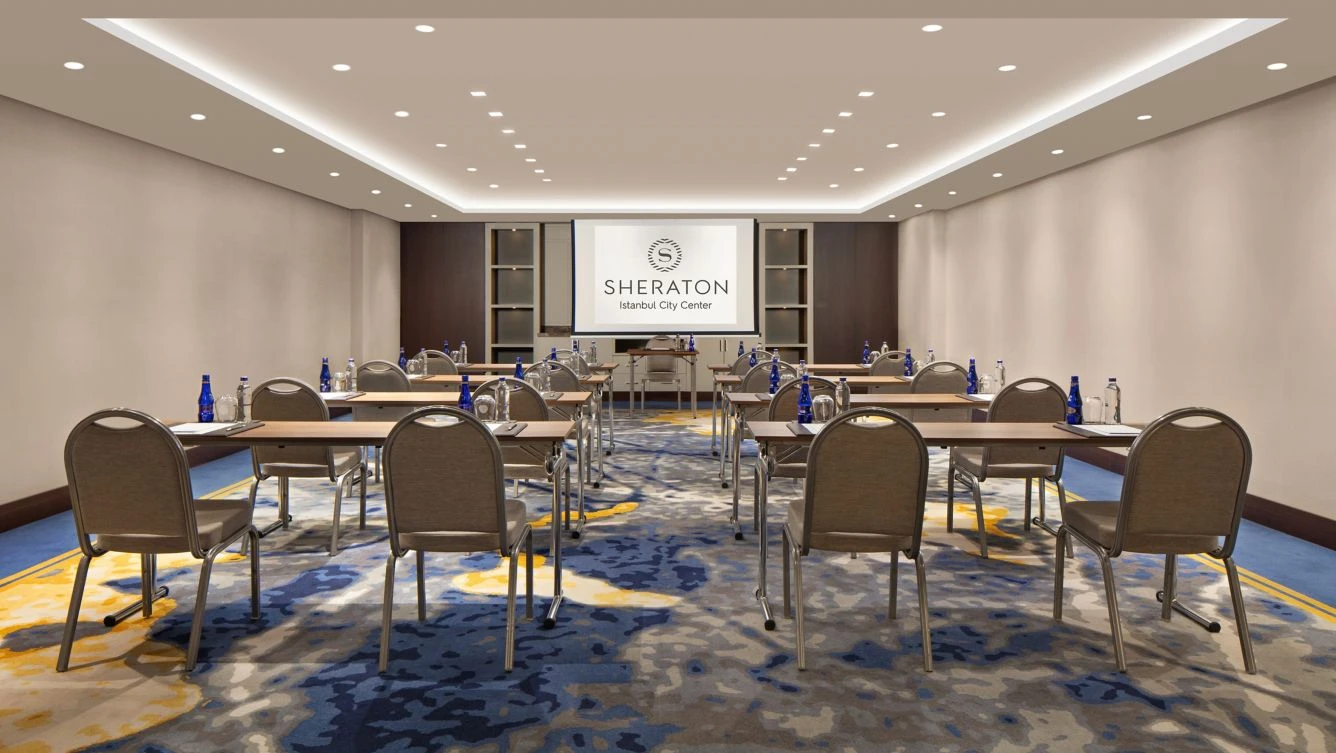
Grand Ballrooms and Event Spaces: Where large-scale pattern execution, acoustic dampening, and resistance to heavy static banquet furniture are required.
-
Guestroom Corridors and Elevator Landings: Where continuous, directional foot traffic and luggage cart movement demand high tuft density and delamination resistance.
-
Hotel Lobbies and Reception Areas: Where establishing immediate visual luxury must be balanced against heavy soil tracking from outdoor entryways.
-
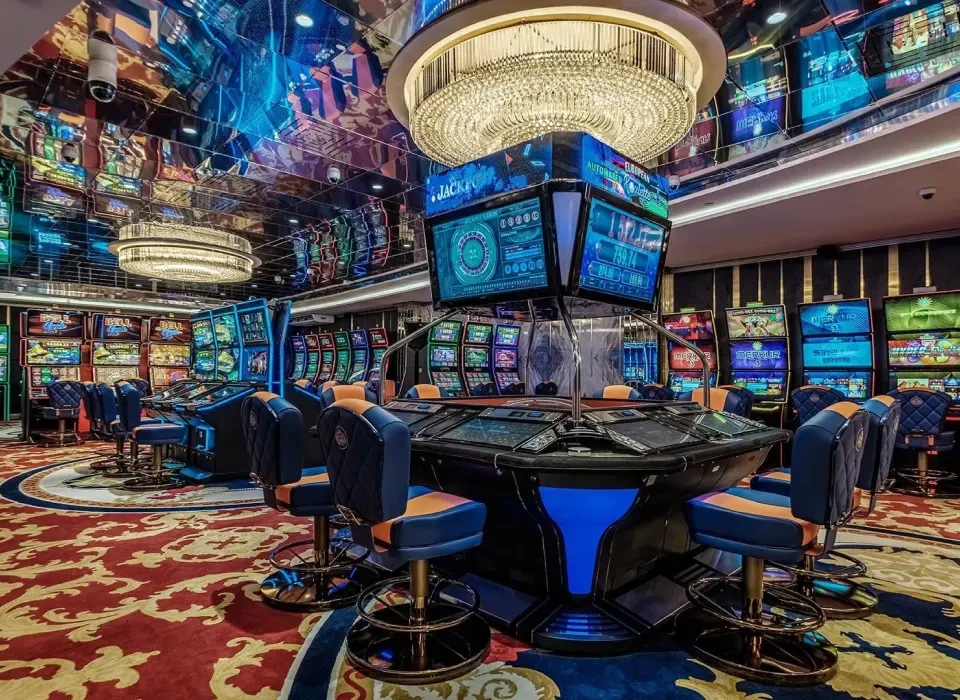
Casino Gaming Floors and Public Lounges: Where continuous operation requires superior appearance retention under severe mechanical stress and foot traffic.
Working with a Manufacturer on Heavy-Contract Carpet Specifications
Navigating the technical nuances of heavy-contract weaving requires close coordination between specifiers and manufacturing experts. Early collaboration helps translate architectural concepts into technically viable textiles that align with project budgets, lead times, and performance targets.
From developing custom strike-off samples and fine-tuning color palettes to conducting lifecycle cost analyses, working directly with a specialized producer ensures every loom run is engineered specifically for its intended environment.
To learn more about custom technical specifications, engineering capabilities, and commercial project support, visit the About Us section at Contempo Carpets.